Showing posts with label Christianity. Show all posts

Tuesday, February 1, 2011

Whose Slave are You? (Rom. 6:15-23)


Whose Slave are You?

(Rom. 6:15-23)

The other day, I read an article on the Civil War. I was surprised and bewildered by what I read. It said that there were slaves who fought on the Confederate side during the war. I could not fathom how slaves willingly fought with their masters against the Union Army. They fought against the very people who were trying to emancipate them (to set them free from their slavery). I then began to think about how sinners in the world today fight against Christ, the One who can set them free from their sins. This sinful world is at war against God and against His Gospel that can set them free and emancipate them from their slavery to sin and their master Satan. Today, we are going to study this passage in Romans 6:15-23 and see that Paul is going to use the image of slavery to determine who your Master is and just who is Lord of your life. Today's sermon is “Whose slave are you?”.

I. Freed from sin not free to sin (v. 15 - “What then? Shall we sin because we are not under law but under grace? May it never be!”).

We have earlier studied about the devastating and destructive power of sin. Sin is the reason for our human condition today of sickness, evil, and death; the fallen condition of this world. Sin is rebellious and hateful towards God and anything that is of God. Sin cannot be cured or overcome by any of man's effort or power. Mankind is enslaved by sin and that brings about satanic control. Sin serves the purpose of Satan and makes a sinner a spiritual child of the devil. It sends unredeemed men to Hell. It controls the sinner's mind, thoughts, and actions. Sin is humanly inescapable. Mankind cannot by ourselves escape from sin or the guilt of sin (even if we genuinely desire to do so). Sin stains and mars everything that we are and do. It is like the growth of an incurable cancer that grows blackly in our hearts till it finally destroys us. That is the hopelessness of sin and without the intervention of God we cannot overcome sin and its deadly effects. Because of sin we cannot have a relationship with God because sin cannot come into the presence of our holy God (Hab. 1:13 - “Thou art of purer eyes than to behold evil, and canst not look on iniquity”). It is from this wretched state of slavery to sin that God has provided freedom through the greatest gift God could ever give mankind. That very gift of freedom from sin is the gift of salvation He offers through His Son, Jesus Christ. When we are saved through faith in Christ, Jesus frees us from the power of sin. This is because we have died in Christ to sin and risen with Him in righteousness (Rom. 6:11 - “also, reckon yourselves to be dead indeed to sin, but alive to God in Christ Jesus our Lord”); that was our last study in Romans. If we through Christ have died to sin then we are no longer under the lordship of sin (Rom. 6:6 - “our old man (sinful nature) was crucified with Him, that the body of sin might be done away with, that we should no longer be slaves of sin”). The relationship of the believer has changed towards God and our relationship to sin has changed also. This means we have a new Lord and we are under the lordship of righteousness (but more on that later). Because of this new relationship to God and towards sin, Paul asks a question and answers it in verse 15, “Shall we sin because we are not under law but under grace? Certainly not!”. Paul is dealing with those who thinks “if I'm free from the power and penalty of sin then I can sin and do as perfectly as I please”. Paul is showing them that Jesus has freed them from their sins and not given them a license to sin. It's the wrong idea about eternal security from those who think they have “fire insurance”; those who see God's amazing grace as cheap grace, believing that since they have prayed the sinner's prayer that they can go out and live how they want to and not reap the consequences. From this verse we can understand that this is not the intention of God's grace at all. God's purpose of His grace is to free man of sin. God's grace through Christ justifies a life and also transforms that life (2 Cor. 5:17 - “Therefore, if anyone is in Christ, he is a new creation; old things have passed away; behold, all things have become new”). If there is no evidence of a life that is changed morally and spiritually, transformed through salvation in Christ, then that person is most likely not saved. Christ has freed us from sin, not freed us to sin. Sin can never glorify God, it can never be a product of grace. The grace of God has freed us to give us the ability to not live sinfully and the ability to began to live life righteously for Him. That is the work of sanctification in the believers life, less like the sinner we once were and more like Christ, who we need to be. Salvation in Christ transforms your life and if there is no evidence of transformation then there is no salvation.

II. Who's your Master (v. 16-18 - “Do you not know that to whom you present yourselves slaves to obey, you are that one's slaves whom you obey, whether of sin leading to death, or of obedience leading to righteousness? But God be thanked that though you were slaves of sin, yet you obeyed from the heart that form of doctrine to which you were delivered. And having been set free from sin, you became slaves of righteousness”).

Paul uses the picture of slavery to see who our allegiance is to. Paul's picture is of someone who is a slave that has willingly given their life in total obedience to their master. He says that we can be slaves of sin which leads to death or become obedient to God which leads to righteousness. If our pattern of living is sinful then we are sin's slaves but if we live our lives for God's glory then we are being obedient to His will and we are God's slaves. Our lives will reflect who is lord of our lives. Slavery to sin brings about physical and spiritual death while slavery to God brings about righteousness, the earmark of eternal life. There is a lie that we can be master of our own life and destiny, but that is just a delusion. We need to understand we are never really free. Either we are mastered by sin under the lordship of Satan or we are mastered by righteousness under the Lordship of Jesus Christ. Those are the only two influences that determine our lives. Our habitually sinful life needs to be in the past and buried while the new life in Christ needs to be our present and future, alive and maturing. I think it needs to be reiterated that we will never be without sin in this body but we are as Christians need to be growing and maturing spiritually. We will never be sinless till we are glorified but as we walk in sanctification we sin less, we allow the Holy Spirit to conform us to the image of Christ. But how is it that we have come to the place of being under the Lordship of Christ and slaves of righteousness? Evidently it has nothing to do with human determination or knowledge or wisdom or effort but only because of the gospel message of Jesus Christ that has saved us from the slavery of sin. Through Christ we have become the children of God, we are God's very own. When we saved, we are positionally placed in Christ's righteousness because that's what makes us acceptable to God and in a right relationship with Him. It is solely through the person and work of Christ that we are saved us and it sets us free from sin. But when we are saved God's grace changes us and we are enabled to begin to live out a righteous life. Let's look at verses 19-22 to see how we are enabled to live.

III. Living for the Master (v. 19-22 - “I speak in human terms because of the weakness of your flesh. For just as you presented your members as slaves of uncleanness, and of lawlessness leading to more lawlessness, so now present your members as slaves of righteousness for holiness. For when you were slaves of sin, you were free in regard to righteousness. What fruit did you have then in the things of which you are now ashamed? For the end of those things is death. But now having been set free from sin, and having become slaves of God, you have your fruit to holiness, and the end, everlasting life”).

When we are saved, we are eternally saved. Our spirit (inner man) has been eternally redeemed and it is no longer subject to the power of sin. But our outer man, our flesh, is subject to defilement by sin. It will always be a struggle and a place of battle as long as we are living in this temporary body of flesh. As I have just stated that we are positionally placed in Christ's righteousness but because of our position in Christ we know are enabled to live out a practical righteousness. We are to first dedicate ourselves daily to the Lordship of Jesus Christ, Paul said in Romans 12:1 that we are to “present your bodies a living sacrifice, holy, acceptable to God”; so now let us present (give willingly and obediently) our bodies (or like it says here in verse 19) presents the members of your body in obedience of God's word to His work and will. It simply means to daily give yourself and your life over to the righteousness of God, to live out practical righteousness. Don't allow yourself to give place to sin (don't... give place to the devil – Eph. 4:27) but keep your heart and mind on Christ and His Word then by the power of the Holy Spirit you can live righteously. When we were sinners, we could not help but to sin (when you were slaves of sin, you were free in regard to righteousness), that means we were nowhere near righteousness. We were on that slippery slope of destruction but thanks to God, He chose to reveal His love to us through Jesus Christ. Through the enabling power of Christ, it is now possible for us live righteously and we should present our members as slaves of righteousness. When we were sinners, our sinful lives lead to more sin, but when we became saints, our lives as slaves to righteousness should lead to even further righteousness. The practice of righteousness (that's a good way to say it), will lead us into deeper walks of righteousness and holiness. A child of God, if he is growing in this grace walk, will be maturing more and more into righteousness. But if a believer, is not growing or progressing, although they will fall back altogether out of righteousness, will slip back further into sin. We need to keep the eyes of our heart fixed on Christ so that we will not lessen in our commitment to our Lord and Master. Let's commit to being His slave, obedient to His will which is His Word.

I want to finish this sermon with this verse, verse 23 “For the wages of sin is death, but the gift of God is eternal life in Christ Jesus our Lord”, an unrepentant heart that is still enslaved to sin will find that the end of that sinful life is a judgment of condemnation. The result of sin, the payment (wages) for the life of sin is death, both physically and spiritually. Hell's down payment is the knee that will never bow in faith and repentance to Jesus Christ. God's gift of salvation through Christ is freely offered today. Come to know Christ as your savior and Lord today.

Friday, January 28, 2011

Excuses of the Guilty (Rom. 1:18-21)


Excuses of the Guilty
(Rom. 1:18-21)
Last week, we dealt with what the wrath of God is and what that means in relation to mankind; that our holy God hates sin and because he is holy and just He must punish sinners. God has revealed to the entire world through the scriptures His wrath and His salvation from the condemnation of sin. Because of this knowledge God has pronounced judgment against sinful man. This verdict of His wrathful judgment against lost mankind has indicted all those who reject God and His remedy of mercy and grace found in His Son, Jesus Christ. The high, holy court of Heaven has called three defendants, representative of mankind, to stand and receive their day in court to answer for their sins. These 3 defendants are here in chapters 1&2 and they are the heathen man, the moral man, and the religious man.

Introduction: God’s indictment (v.18)
God’s fierce wrath is revealed against all ungodliness (sins against his Person) and unrighteousness (sins against his will). The first category is vertical (faulty relationship towards God) while the second is horizontal in nature (faulty living & faulty relationships with fellow man due to our faulty relationship with God). Because of our sinful nature we are unable to have a right relationship towards God and if we are unable to have a right relationship we certainly cannot live according to the righteous standards that God has set forth in His divine, moral Law. Because of our sins we are indicted under the wrath of God. The indictment against mankind is specifically listed in verses 18, it begins by saying they, mankind, “hold (or suppress, smother) the truth in unrighteousness”; in other words, men suppress the truth of God by steadfastly clinging to their sins. Man’s sinful nature desires to naturally oppose God and his truth. The truth that they are sinful and unable to not sin and need God to save them from themselves and the end results of their unrepentant hearts. All of humanity is under God’s condemnation and they are found guilty by two things: 1. God’s Law (2:12 – “For as many as have sinned without law will also perish without law, and as many as have sinned in the law will be judged by the law”; 2. their own deeds (2:6 – God “will render to each one according to his deeds”). You could say that ‘God’s Law’ and ‘their deeds’ are their jury. So let’s begin with our defendants.

I. Defendant #1: The Heathen or Pagan Man (vv. 19-32)
The heathen or pagan man is representative of those who claim ignorance of the knowledge of God. They are in different religions or they could be atheists or they just reject the Christian concept of God. The generation coming up today could be counted among these. They have decided to call this generation the “Y” generation. They are called this because they always say “why should we believe in God, especially the Christian God”. They have been brought up in homes that don’t go to church or read the Bible and have been brain washed in our public schools to believe only in themselves and whatever propaganda the TV and internet says is true. They are thought to question and be skeptical of whatever Christianity says is true. This “Y” generation is truly the ‘pagan’ generation that has forsaken the only true God of the Bible. This generation has chosen to serve a ‘god’ of their own choosing or even not to believe in anything at all. There has never been a time in our nation that we have had such a large percentage of people not in church of some kind. The percentage of people in the USA today are ignorant of what the Bible says and the real gospel message of salvation in Christ. In Amos 8:11-12, the Bible spoke of a famine of God’s word in the land. Here in our nation there seems to be a “famine of God’s word in the land”. There is a generation that does not know the Lord. A generation that wants to be ignorant of God’s truth and a desire to only smother their guilty conscious with false religion and in vile sins. They have chosen false religions and vain philosophies absent of the truth of God’s word. They have exchanged the holy glory of the one true God with the spiritual darkness of false gods and the giving of themselves over to evil desires and gross sexual sins. Verses 21-32 show their regression to viler and viler sins. The verses in 1:21-23 says, "although they knew God, they did not glorify Him as God, nor were thankful, but became futile in their thoughts, and their foolish hearts were darkened. Professing to be wise, they became fools, and changed the glory of the incorruptible God into an image made like corruptible man; and birds and four-footed animals and creeping things”. We see through history and even today people have chosen to serve a ‘god’ of their own making. Today, the New Age religions and atheists have chosen to worship themselves and the efforts of mankind. The ancient Greeks and Romans worshiped a pantheon of gods that were just as depraved as or worse than men. Ancient peoples like the Egyptians, had gods and goddesses that had features of animals and even considered certain animals sacred. Hindus even today worship animals. Our generation today considers themselves ‘spiritual’ but not specifically believing in any one religion. Modern man finds whatever spirituality that condones their sins and relieves them of the fear of consequences. They deceive themselves to believe that because of their supposed ignorance of God and His truth that He will acquit them of His judgment. Verses 1:19-20 refute their excuses. God’s twin witnesses of 1. Conscience (v. 19 – “what may be known of God is manifest in them, for God has shown it to them”) and 2. Nature (v. 20 – “For since the creation of the world His invisible attributes are clearly seen, being understood by the things that are made, even His eternal power and Godhead”; they witness of the existence and God’s law, “so that they are without excuse”. No matter how much they deceive themselves or numb their conscience with gross sin, it won’t stop His judgment.

II. Defendant #2 – Moral Man (vv. 2:1-16)
I like to call this 2nd defendant the ‘good ole’ boy’. The reason that this 2nd representative of judged man thinks he is not deserving of God’s judgment is because he’s not as bad as other men. Most of the time, he is a decent, moral person and not too sinful in his eyes and mostly law-abiding, hard-working, relatively moral person in comparison to the thief, murderer, crack head, or low-life of society. His excuse is that in comparison of his life to others that he is not as bad as society’s criminals (ex. - kid’s grade on a test-not as bad as Billy). I’m not as bad as others so I’ll be alright with God because God grades on a curve. But God refutes their excuse by they do the same things but in a refined way (hide their sins, etc.). God does not judge them according to man’s best but according to His own standard of righteousness and holiness. But they will not escape God’s wrathful judgment (2:1-4, “Therefore you are inexcusable, O man, whoever you are who judge, for in whatever you judge another you condemn yourself; for you who judge practice the same things. But we know that the judgment of God is according to truth against those who practice such things. And do you think this, O man, you who judge those practicing such things, and doing the same, that you will escape the judgment of God? Or do you despise the riches of His goodness, forbearance, and longsuffering, not knowing that the goodness of God leads you to repentance?”).

III. Defendant #3 – The Religious Man (2:17-3:8)
The religious man Paul used as an example were the Jews. The Jews claimed to be the “people of God” solely on the fact that they knew the law of God and taught it, in other words they were righteous because they were religious (2:17-20 – “Indeed you are called a Jew, and rest on the law, and make your boast in God, and know His will, and approve the things that are excellent, being instructed out of the law, and are confident that you yourself are a guide to the blind, a light to those who are in darkness, an instructor of the foolish, a teacher of babes, having the form of knowledge and truth in the law”). They were outwardly religious but inwardly in the same condition as every other lost man. They did belong to those who had head knowledge about God but no heart knowledge (no personal saving relationship with God). But God refuted their feeble excuse by plainly telling them, “You don’t practice what you preach” (2:21-23 – “You, therefore, who teach another, do you not teach yourself? You who preach that a man should not steal, do you steal? You who say, "Do not commit adultery," do you commit adultery? You who abhor idols, do you rob temples? You who make your boast in the law, do you dishonor God through breaking the law?”). Instead of trusting God to save them from their sins they trusted in their own good works of their religion (ex. RCC, baptismal regeneration, etc.).

What is seen through all these defendants is this simply this that all people regardless of race, creed, color, or social status, that all are under sin and in need of a Savior. God has graciously extended His hand of grace through His Son, Jesus Christ and He is not willing that any should perish in their sins but come to repentance.
Enhanced by Zemanta

Saturday, July 3, 2010

The Wrath of God (Rom. 1:18-19)


The Wrath of God
(Rom. 1:18-19)

Today, we are going to see how the wrath of God is revealed to all mankind. We have heard many sermons on the love of God, the mercy of God, or the grace of God, but we will see another attribute of God today; it is God’s wrath. Today’s sermon is called “The Wrath of God”.
I. What is the wrath of God? (v. 18a)
It seems that no one wants to hear about this particular divine attribute of God. It is just as much an attribute of God as His love or His omnipotentance or His unchangeable nature. God’s wrath is not the idea of a mere man losing his temper; it is God’s hatred of sin and immorality. Because God is so holy, he cannot but hate sin and bring judgment against those who practice sin. We have a church world today where many of those who say they preach the Gospel seem to leave out the fact that God must punish sin, that there is an eternal penalty measured out against all who have not received Jesus as Lord and Savior. Remember that wrath is not the idea of uncontrolled anger or a temper tantrum of a mere man; God’s wrath is a settled, determined righteous anger against the offensiveness of sin. It seems that Paul’s sharing of the gospel message began with an introduction to that all mankind is under the wrath of God. If you remember in our witnessing training we went through that there is the bad news/good news approach to the Gospel. Paul made sure that this church understood that the reality that all men are lost and under the wrath of God then he would show them the way of escaping the wrath through Christ. We cannot truly understand and appreciate the love, mercy, and grace of God until we see the righteousness demands of God against sin or the fury of His anger against evil. We cannot appreciate His forgiveness or the great love of the sacrifice of His Son, Jesus Christ if we cannot see how detestable sin, evil, and immorality is in the eyes of God. We cannot have the understanding of God’s gracious love through Christ if we do not know His hateful wrath against sinful men. God perfectly hates evil just as much as He perfectly loves righteousness. The fullness of the gospel message is most clearly seen when we show what scripture reveals about the spiritual nature of man (spiritually dead) is condemned by the righteous wrath of God; the Good News of the Gospel is more fully appreciated when we all understand that God wants to save us from our sinful nature (which incurs God’s judgment against us) through His Son, Jesus Christ, who paid the penalty of our judgment. Jesus met the righteous demands of God’s Law through his sinless sacrifice of His shed blood and life on the cross. When we just simply show that God’s wrath is against sin but God’s salvation from sin and judgment can be found through faith in Christ. The scripture reveals in John 3 both the salvation and the wrath of God. It says in John 3:16, “For God so loved the world that He gave His only begotten Son, that whoever believes in Him should not perish but have everlasting life” and it says in v. 36 of that same chapter, “He who believes in the Son has everlasting life; and he who does not believe the Son shall not see life, but the wrath of God abides on him”. The revelation of God’s wrath helps lost man see more clearly see the need of God’s salvation and forgiveness. A sinner will not seek out Jesus as Savior if he does not know that he is sinful and his sin is what condemns him. The wrath of God is basically defined as God’s hatred of sin and the fact God must punish sin. Sinful mankind is condemned and under God’s wrath but God has made a way of escape through Christ.
II. Where and How is it Revealed? (v. 18b)
God’s wrath is revealed from heaven. Our holy God has revealed it from His holy Heaven. The word ‘revealed’ here in the Greek gives us an idea that it means it is being constantly revealed. We can see in the Holy Scriptures that God has revealed His wrath time and time again. From Genesis, we see that when Adam and Eve sinned, that immediately after their sinful disobedience of God’s command, God pronounced on them the sentence of death. It was not just on Adam and Eve, but on all their descendants (that’s us, all mankind) and the earth was cursed right along with them. We can also see God’s judgment upon the whole world in the Great Flood; God’s wrath was seen as judgment fell upon all humanity in a world-wide deluge that drowned all humanity except for eight people (Noah’s family) God saved in an ark. We can also witness God’s judgment against the city of Sodom and Gomorrah, upon the first born of Egypt and the drowning of Pharaoh’s army. If we look at the ‘curse of the Law’ and how we see in the sacrificial system in the Mosaic Law, that the untold millions of innocent animals killed and blood shed. That in all of those animals killed and bled it all revealed man’s sinfulness and unrighteousness but it pointed to the only One whose blood and death would save us from our sin and condemnation. In the death of Christ, we can see God’s wrath was also revealed. Jesus, God’s Son, while on the cross took upon Himself, God’s wrath for us. Jesus took upon Himself the sin of the world and bore the full effect of God’s wrath on the cross (2 Cor 5:21 –“For He made Him who knew no sin to be sin for us, that we might become the righteousness of God in Him”). That penalty that God demanded for our sins, Jesus met on our behalf. God hates sin so much and His wrath demanded that its penalty be met that He chose to allow His only Son to be crucified and killed on our behalf. This was the only way fallen humanity could be redeemed from the curse of sin.
So, we see that God’s wrath has been revealed and it is still being revealed, and will be revealed especially in the End Times. Sometimes it seems that the wicked still prosper and prevail but it just seems that way. We must remember that the wicked will not escape God’s wrath. Here on this earth they may bribe, escape, or fool the justice system of this world, but God’s wrath and judgment will have no loop holes for the wicked to escape (Rev 20:12-13,15 – “And I saw the dead, small and great, standing before God, and books were opened. And another book was opened, which is the Book of Life. And the dead were judged according to their works, by the things which were written in the books. The sea gave up the dead who were in it, and Death and Hades delivered up the dead who were in them. And they were judged, each one according to his works. And anyone not found written in the Book of Life was cast into the lake of fire”). God’s wrath has, is, and will be revealed.
III. What is the verdict of God’s wrath against? (v. 18c)
It is against the ungodliness and unrighteousness of men. Ungodliness are sins against the very Person of God and unrighteousness are sins against God’s will. That just shows that we are simply sinful in all that we are and do. Sin taints and corrupts anything we do. So that any human attempt to span the divides that sin separates us from God always fails. Nothing worthy that we do as humans on this earth can accomplish salvation and acceptance by God. Rom. 3:10 says, “There is none righteous, no, not one” and 3:23 says, “for all have sinned and fall short of the glory of God”; our sinfulness means that we lack the means to truly reverence God, it means that we have a faulty personal relationship with God. If we have a wrong relationship with God then our actions will reflect that in unrighteous living towards God and our fellow man. Sin attacks the Person of God and His righteous Law. God only hates sin. He does not hate people but only the sin that they do. Sin will always bring about the wrath of God for our holy God must punish sin. Unrighteousness is so much a part of man’s nature that every person has a built in, natural desire to suppress and oppose God’s truth that we can’t save ourselves and that only God can save.
Today, we have seen that God’s wrath is against unsaved, godless mankind. We understand that God is so holy that sin and sinners are not allowed in His presence. We know through scripture that God is holy and just and because of that He hates sin and must therefore punish the sinner. But this brings us to the truth of scripture that God is love and because he loves mankind, He has provided a way of salvation through the sacrificial death of Christ on the cross of Calvary. The Bible wonderfully puts it this way, God is “not willing that any should perish but that all should come to repentance” (2 Peter 3:9).


Enhanced by Zemanta

Friday, August 21, 2009

Because He Lives (What Happens When We Die)


Because He Lives
(What Happens When We Die)
(Job 19:25-27)

We as Christians sometimes may not fully understand what happens to us when we die. We know that because we are saved by Christ we will go to Heaven and forever be with Jesus. But sometimes we get confused by things like the resurrection, the rapture, and what part of us goes to Heaven when we die. In this sermon, we will get a better understanding of what happens when we die.

I. What happens to our soul when we die? (2 Cor 5:8 - “We are confident, I say, and willing rather to be absent from the body, and to be present with the Lord.”
When we read this verse we understand it simply for what it says. Paul says simply he is confident of this fact that to be absent from the body (death for a Christian) is to be present with the Lord. It is a without question according to the scripture that at our death, our soul, our spirit leaves this body and goes into eternity with our Lord. We see Jesus’ words to the thief that was crucified beside Him, “And Jesus said unto him, Verily I say unto thee, To day shalt thou be with me in paradise” (Luke 23:43 KJV). When we die, our soul goes to Heaven immediately. There is no waiting period, there is no soul sleep (7th Day Adventist believes this and some cults), the Christian is immediately in the presence of God in his eternal reward of Heaven. You see death for the child of God should not be feared, it will come if we are not raptured. We should a great confidence in knowing that because our Lord has saved us he has also guaranteed that we will live in our eternal home with Him in Heaven. Paul said this about facing death, Phil. 1:21-24, “For to me, to live is Christ, and to die is gain. But if I live on in the flesh, this will mean fruit from my labor; yet what I shall choose I cannot tell. For I am hard pressed between the two, having a desire to depart and be with Christ, which is far better. Nevertheless to remain in the flesh is more needful for you”. Paul was about to soon face a martyr’s death and he knew it was soon but he expressed it so wonderfully, to live is Christ and to die is gain. His desire to see his Lord and enjoy the wonders of Heaven was what he would encounter when faced his death but he also knew that he had to stay a little longer to finish God’s work and God’s will to the church at Philippi. For the Christian, death is the doorway we step through to our eternal destiny with our Jesus in Heaven. Our promise of Heaven is secured by death and resurrection of Jesus Christ. We understand this and find great joy at knowing that Jesus has not only saved our souls but He has also guaranteed our eternal life and our eternal home. What great love and great gifts of God’s grace that we have received because we have by faith received Jesus Christ as our Lord and Savior.
II. What happens to our body after we die? 1 Thess. 4:13-17, “But I would not have you to be ignorant, brethren, concerning them which are asleep, that ye sorrow not, even as others which have no hope. For if we believe that Jesus died and rose again, even so them also which sleep in Jesus will God bring with him. For this we say unto you by the word of the Lord, that we which are alive and remain unto the coming of the Lord shall not prevent them which are asleep. For the Lord himself shall descend from heaven with a shout, with the voice of the archangel, and with the trump of God: and the dead in Christ shall rise first: Then we which are alive and remain shall be caught up together with them in the clouds, to meet the Lord in the air: and so shall we ever be with the Lord.
At death, our bodies go into the grave and remain until it is rejoined with the spirit. As these verses declare, we understand that this will happen at the rapture of the church. This is the redemption of our bodies and it is the finalized work of salvation and the perfection of our bodies. When we trusted Christ for our salvation here on this earth, He gave us a new, redeemed spirit, He cleanses our soul from sin and makes it new; we read 2 Cor. 5:17 - “Therefore if any man be in Christ, he is a new creature: old things are passed away; behold, all things are become new.” But we still live in this feeble body of flesh and as a Christian we should eagerly await the redemption of our bodies (Romans 8:22-23 - “For we know that the whole creation groaneth and travaileth in pain together until now. And not only they, but ourselves also, which have the firstfruits of the Spirit, even we ourselves groan within ourselves, waiting for the adoption, to wit, the redemption of our body.”) The redemption of our body is also called the glorification of our body and again repeating myself it is the finished and complete work of salvation that was begun when we became recipients of God’s salvation. When we receive our glorification then we will forever be free from sin, sickness, and death. This new redeemed body will not be like our old, sin cursed body. To understand this better we need to read 1 Cor. 15:35-38,42-49 “But someone will say, "How are the dead raised up? And with what body do they come?" Foolish one, what you sow is not made alive unless it dies. And what you sow, you do not sow that body that shall be, but mere grain; perhaps wheat or some other grain. But God gives it a body as He pleases, and to each seed its own body. …The body is sown in corruption, it is raised in incorruption. It is sown in dishonor, it is raised in glory. It is sown in weakness, it is raised in power. It is sown a natural body, it is raised a spiritual body. There is a natural body, and there is a spiritual body. And so it is written, "The first man Adam became a living being." The last Adam became a life-giving spirit. However, the spiritual is not first, but the natural, and afterward the spiritual. The first man was of the earth, made of dust; the second Man is the Lord from heaven. As was the man of dust, so also are those who are made of dust; and as is the heavenly Man, so also are those who are heavenly. And as we have borne the image of the man of dust, we shall also bear the image of the heavenly Man.”
Paul is comparing us to seed. He is saying that our bodies are only a mere glimpse of what we shall be. We know what the seed of a watermelon looks like and what a watermelon looks like, and yet it no ways resembles each other but we know that the fruit came from the seed. The fruit is absolutely identified with the seed. We will know each other in Heaven but it will not be the old me, it will be the new and glorified me. When we receive our glorified body it will not resemble our old one, there will be no sin, no defect, no sickness, no pain, or discomfort at all in it. We will have a body like our Jesus (1 John 3:2 - “Beloved, now are we the sons of God, and it doth not yet appear what we shall be: but we know that, when he shall appear, we shall be like him; for we shall see him as he is”). We know from the verses we read in Thessalonians that we will be raptured, the dead in Christ will rise first and then we which are alive and remain but here in 1 Cor. 15 we read these verses, 51-57 - “Behold, I show you a mystery; We shall not all sleep, but we shall all be changed, In a moment, in the twinkling of an eye, at the last trump: for the trumpet shall sound, and the dead shall be raised incorruptible, and we shall be changed. For this corruptible must put on incorruption, and this mortal must put on immortality. So when this corruptible shall have put on incorruption, and this mortal shall have put on immortality, then shall be brought to pass the saying that is written, Death is swallowed up in victory. O death, where is thy sting? O grave, where is thy victory? The sting of death is sin; and the strength of sin is the law. But thanks be to God, which giveth us the victory through our Lord Jesus Christ.”
There is great victory of salvation though our Lord and Savior Jesus Christ by His finished work of salvation by His suffering and death on the cross. And by His resurrection from the grave three days later it guarantees that our Lord is the Lord over sin, death, and the grave. 1 John 5:4 - “…this is the victory that overcometh the world, even our faith”. Our faith in Christ is the victory that overcomes the world, our sins, our death and the grave. It is because of Jesus that I can find hope in life eternal with Him. John 11:25-26 - …I am the resurrection, and the life: he that believeth in me, though he were dead, yet shall he live:
And whosoever liveth and believeth in me shall never die. Believest thou this?”
Twenty-eight years ago, I put my faith and trust in Jesus Christ as my Lord and Savior. Because I believed He was the resurrection and the life and I believed He was the only way to the Father and eternal life. By faith in the person and work of Jesus’ Christ.
III. Review - Today as we have looked at death in view of God’s Word, we now know that death is only the doorway into the next life, eternally at home with our Lord God to praise and serve Him forever. That one day we will face death and immediately our soul will be in the presence of God and our body will be in the grave until the time appointed (the Rapture) where we will receive the glorification of our body (the redemption of our body) where the redeemed, sinless body will reunite with our redeemed soul to live in a redeemed Heaven and Earth (Rev. 21:1-4 - “And I saw a new heaven and a new earth: for the first heaven and the first earth were passed away; and there was no more sea. And I John saw the holy city, new Jerusalem, coming down from God out of heaven, prepared as a bride adorned for her husband. And I heard a great voice out of heaven saying, Behold, the tabernacle of God is with men, and he will dwell with them, and they shall be his people, and God himself shall be with them, and be their God. And God shall wipe away all tears from their eyes; and there shall be no more death, neither sorrow, nor crying, neither shall there be any more pain: for the former things are passed away.”
You see it be a glorious place in our new home where we can totally and completely enjoy it in our new glorified body. Death is sometimes fearful to us because it is unknown to us because we have not experienced it yet. But when we do, we know that Jesus will be with us every step of the way (Heb. 13:5 - “for he hath said, I will never leave thee, nor forsake thee”). He is with us every step of the way in our walk of salvation (Phil. 1:6 - “Being confident of this very thing, that he which hath begun a good work in you will perform it until the day of Jesus Christ”) and He will keep us secure in His salvation until the day of completion in our Heavenly Home.

Today, if you don’t have this assurance of your salvation you can make it sure today. If you think ‘I don’t know where I will go when I die?’, today is the day of salvation. Christ is very present here today and He welcomes all to the cross for forgiveness.

Sunday, July 12, 2009

How We Become Children Of God.


How To Become A Child Of God
(Gal. 4:4-7)

Today we will look at an aspect of salvation maybe we don’t give much thought to at all and that is adoption. There are many different aspects to our salvation in Christ but let us consider our “adoption as sons”. This word adoption gives us a wonderful understanding of our position we now have in Christ. It should make us aware of our relationship we now have with Father God. Let’s explore our relationship with God by understanding what “adoption” means and how it applies to us.
I. Adoption in Paul’s time (Eph. 1:5 – “having predestined us to adoption as sons by Jesus Christ to Himself, according to the good pleasure of His will”).
First thing we want to do is have a good understanding of what adoption was in Paul’s day and age. Adoption in the time of Paul was known by the standards of Roman law and as we look at adoption in the natural we will see some analogies in the supernatural. Adoption was the legal action by which a person takes into his family a child not his own with the purpose of treating him as and giving him all the privileges of his own natural child. An adopted child was legally entitled to all rights and privileges of a natural-born child. An adopted child could not be disinherited by the adopting parents. According to the Roman legal system the person who was adopted into a family gained all the legal rights of a legitimate son in the new family, but he lost all the rights, privileges and responsibilities in his old family. By becoming a member of the new family he gained all the rights of his new father’s estate. He was now an equal with the other sons and daughters in his new family. He was a co-heir with them according to the law. He was regarded as a new person who had a new life in a new family. Another wonderful thing about the Roman law was that the old life of the adopted son was completely wiped out. All of his debts were cancelled. His past now had nothing to do with him. He was in a new relationship with a new family. I don’t know about you but reading about the adopted child gave me some fresh insight onto the truth of our relationship with God and it blessed my soul. Adoption is a beautiful analogy of God’s amazing sacrifice to save a lost and dying, sinful people and save them and by the process of salvation make them His own children with the rights and privileges that belong to those who are His children. We need to see what great lengths He did to make us, who have been saved through faith in Christ, into children of God.
II. Christ is our means of adoption (Gal.4:4-5 – “when the fullness of the time had come, God sent forth His Son, born of a woman, born under the law, to redeem those who were under the law, that we might receive the adoption as sons.”)
The Bible is very blunt about the relationship of mankind to God. According to Scripture we are mere creations of God and because of our sinful depravity of our souls we are seen as enemies of God. It says in Rom. 8:7, “…the carnal (sinful) mind is enmity (hostile enemy) against God: for it is not subject to the law of God, neither indeed can be” and Col. 1:21, “And you, who once were alienated and enemies in your mind by wicked works…”, our sinful nature was at war against the holiness of God. So then we can see we were the sinful, hostile enemies of God not desiring to seek the things of God but our minds set on sinful living and pleasures of the flesh (Rom. 3:10-12, “There is none righteous, no, not one; There is none who understands; There is none who seeks after God. They have all turned aside; They have together become unprofitable; There is none who does good, no, not one.”). But in spite of our First Parents fall and the sinful condition of our souls, God provided a way of salvation through Jesus Christ. Verses 4 and 5 tells us that in God’s perfect timing and perfect will sent His Son to redeem us from the curse of sin and bring us into right relationship through Christ. God foreordained the plan of salvation in Jesus knowing full well that mankind would become sinful and fallen even before the world was created but Jesus, the Eternal Son of God, willingly purposed to become our one and only sacrifice for sin by His suffering and death on the cross. We can even see that in Rev. 13:8 where it calls Jesus the “Lamb slain from the foundation of the world”. We have now in Christ have become the sons and daughters of God. We are now in a special relationship as the family of God through adoption. But we are only recognized as being His children through Christ and by nothing else (Gal. 3:26 – “For you are all sons of God through faith in Christ Jesus”).
III. Privileges and responsibilities of adoption (Gal. 4:6-7, “And because you are sons, God has sent forth the Spirit of His Son into your hearts, crying out, "Abba, Father!" Therefore you are no longer a slave but a son, and if a son, then an heir of God through Christ.”)
Our new relationship of being a child of God allows us to cry out to God as Father, the particular term Paul uses here is Abba, and this is a term of endearment. I never called my father, ‘father’, I called him dad. Abba is like saying daddy, it shows a close personal relationship with your Father. What a privilege it is to call out to God and call Him “Daddy”. Because of our position in Christ, we are accepted, we are heard and we are recognized as His children. We have become heirs of God and co-heirs with Jesus (Rom. 8:17). The rights and privileges in being a son and daughter of God are awesome. As I mentioned before, an adopted child did not have to worry about being disinherited they would always be that persons son or daughter. For the Christian once we are saved, adopted into the family of God, we are always saved, forever a child of God. If we are adopted, we are adopted for ever. If we are saved, we are saved for ever. If you are really saved, you are saved eternally. Our salvation and our adoption as the children of God is eternal and no one can break the bonds of adoption. So we belong to the family of God, and we are raised to the status of an heir of a son. No longer fearful of being lost in sin ever again and forever assured of our eternal salvation in Christ because we are forever accepted as a son or daughter of God. Another blessing of adoption was that upon being accepted into the new family that the adoptee was considered a new person with a new life and all that was in the old family was forgotten and gone. Any debt was forgiven and any part of their old life erased because of their acceptance into the new adoptive family, the adoptee’s identity was now with their new family and the old family ties were completely cut off. We when receive Jesus by faith as Lord and Savior, we become a new creation in Christ Jesus and our old life is forgiven and forgotten by the power of God (2 Co. 5:17 -Therefore, if anyone is in Christ, he is a new creation; old things have passed away; behold, all things have become new.) I am also glad that all my sin debt was forgiven, the penalty that I had incurred was what I deserved, but Jesus Christ took the penalty for me and by His sacrifice paid the price (Col. 2:13-14 - And when you were dead in your transgressions and the uncircumcision of your flesh, He made you alive together with Him, having forgiven us all our transgressions, having canceled out the certificate of debt consisting of decrees against us and which was hostile to us; and He has taken it out of the way, having nailed it to the cross .). The great love and grace God has shown us through our Lord Jesus, our adoption made possible only through the Son. Because we are accepted as children by that heavenly adoption in Christ we have these great privileges and rights because they are ours by our Father’s will. But we must be led by the Spirit of God because we are the sons of God. We have a responsibility to show the world around us we are his children. Being led by the Spirit means we are obedient and willing children. We are to be obedient to His Word and living out the Word and His Will in our lives.
If we are thankful for our salvation and grateful for the acceptance as sons and daughters of God then we will represent our Father and show that we are truly His Children.

Tuesday, April 14, 2009

Sermons from Acts: The Stoning of Stephen


The Stoning of Stephen
(Acts 7:51-8:1a)

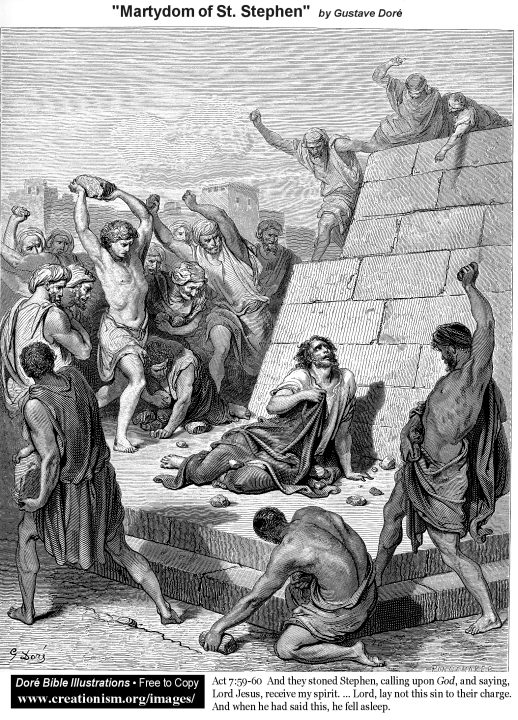
We all know of Stephen, how he was the first martyr of the Church. We often read this passage and think about the seeming tragedy of his death. But, I want us to look at this passage in a different light. The tragedy that day wasn’t the death of Stephen but the crowd that stoned him. Stephen was not the victim that day, in fact he is not the victim at all, he wins. In death he is the victor, and though they live, they became the losers. Today, we will see that Stephen was a man who had grace to live and grace to die.

I. Stephen Before the Accusers- (Acts 6:9-7:1)
A. What we know about Stephen- Acts 6 tells of Stephen that he was one the seven men (of good reputation, full of the Holy Spirit and wisdom) chosen by the Apostles as the first deacons of the church. It goes on to tell us that Stephen was one who was “a man full of faith and the Holy Spirit”, and that there were signs and wonders done among the people through Stephen. Stephen was a witness for Christ by sharing the Gospel and the life he lived before others. Stephen evidently went and taught and preached in some of the synagogues because certain leaders of the synagogues tried to debate with Stephen (many against one) but they were not successful, we see this in Acts 6:10, “And they were not able to resist the wisdom and the Spirit by which he spoke”; they could not handle his wisdom or his spirit. All their minds put together were no match for one Spirit-controlled mind. So we see that Stephen was a man of God who was full of the Spirit, full of faith, and wisdom and knew scripture and was able to effectively communicate it and was a Christian man that was held in high esteem by the church and the Apostles.
B. The False Accusations- We talked how the Jewish religious leaders lost a debate to Stephen and they did what many people do when they lose a debate and a confrontation with the truth, they slander and lie on Stephen (Acts 6:11 Then they secretly induced men to say, “We have heard him speak blasphemous words against Moses and God”). They accuse him of blasphemy by hiring false witnesses against him to say so. When telling them about Jesus, Stephen does so with great courage and does not water down the Gospel message. But they falsely accuse him of blasphemy and have to hire false witnesses because they could not dispute truth, so they determine to silence the proclaimer of truth.
C. The Council- just like Jesus we see that they have falsely accused Stephen of blasphemy and not only that they seize him (false arrest-sound familiar) and they have convened a Council (kangaroo court) (Acts 6:12 And they stirred up the people, the elders, and the scribes; and they came upon him, seized him, and brought him to the council).
And here at this council they, just like they did Jesus, bring in the false witnesses (had to be two) and they tell their lies against him. These Jews mean to kill Stephen, because if they pronounce him guilty of blasphemy they can stone him. They bring the false accusations against him and they have this mockery of a trial and after all the false statements and lies of accusing him of being an evil blasphemer they look at Stephen and as they behold his face verse 15 says, “And all that sat in the council, looking steadfastly on him, saw his face as it had been the face of an angel”. Facing this fake trial and false accusations and the possibility of death, we see Stephen full of the Holy Spirit with the glory of God shining on his face. God rebukes them through his servant Stephen by allowing the manifest glory of God to shine on his face.
II. Stephen Answers and Defends the Gospel (Acts 7)
Acts 7 stars out with this verse, “7:1 Then said the high priest, Are these things so?”, they so ‘graciously’ let Stephen answer and address his accusers, to defend himself. By the time he is done defending himself, they become the ones on trial for blasphemy. In his sermon, he says, in effect, "I believe in God, but you put God in a box. I believe in Moses, but you continually break the law that he gave us from God. I believe in the Temple, but if your forefathers hadn't desecrated it with worshiping idols, it wouldn't have been destroyed by pagan, godless peoples. This now in your third Temple, and guess who doesn't believe in Herod's temple?...God, who has had to keep wiping them out." So he turns the tables on them completely and indicts and condemns them. This sermon builds until it climaxes with the confrontation in verses 51-53, "51 Ye stiffnecked and uncircumcised in heart and ears, ye do always resist the Holy Ghost: as your fathers did, so do ye. 52 Which of the prophets have not your fathers persecuted? and they have slain them which showed before of the coming of the Just One; of whom ye have been now the betrayers and murderers: 53 Who have received the law by the disposition of angels, and have not kept it". He tells them the truth about the condition of their heart and how they failed to recognize the Messiah was in their midst, performed sign and wonders and miracles and they were so spiritually blinded they did not recognize their salvation, Jesus Christ. And they killed him just as they had killed the prophets sent to them from God before Him. He again tells them that they again are resisting the Holy Spirit and refuse to believe in the word of God and the Son of God, in fact he calls them betrayers and murderers. Stephen courageously speaks the Word of God boldly and proclaims the only Lord and Savior of all, he does so knowing full well of the consequences and still he does not flinch or apologize for the message of truth.
III. From Death To Life (Acts 7:54-8:1a)
A. Rejection- So what was the result of them hearing this message of truth? Where they convicted by the Spirit? Verse 54 says that, “When they heard these things, they were cut to the heart, and they gnashed on him with their teeth”; it seems they heard the message and fully understood what he was saying. But the reaction was one who was convicted but not repentant. The ‘cut to the heart’ shows that the saw of conviction had ripped them through the middle. They knew that everything he had said was true. The ‘gnashed on him with their teeth’ shows the great rage and frustration they felt. They could not verbalize their hatred and anger and just ground their teeth in fury. Instead of repenting and yielding to the convicting power of the Holy Spirit they ground their teeth in fury at Stephen and at God. It reminds me of the verse in Matt. 24:51- And shall cut him asunder, and appoint him his portion with the hypocrites: there shall be weeping and gnashing of teeth. In there spiritual blindness they chose to reject the glorious light of salvation. They hardened their hearts time and time again to the revelation of God’s salvation found only in Christ. They had rejected the Savior Jesus and now again they rejected the Gospel of Christ. Just like Pharaoh they hardened their hearts and rejected the word of God and just like Pharaoh God now hardened their hearts and rejected them. After the death of Stephen you see that the Gospel being preached to the Samaritans and Gentiles away from the Jews.
B. Full of Anger or Full of the Spirit- As Stephen is facing this hatred and anger, the Bible says that he was ‘full of the Spirit and looked into heaven’. He faced evil just like any Christian, through the power of the Spirit and looking unto Jesus for his help and strength. We can face life challenges and problems the way Stephen did or the way the Sanhedrin did (angry and blaming God), it’s up to you. Looking at these couple of chapters that describe Stephen, it’s clear that whenever it’s talks of him it said that he was ‘full of the Spirit’; it shows that he yielded every part of his life to the control of the Spirit of God. We need to heed the example of Stephen.
C. Vision of Christ and Derision of the Mob - now what was it that really pushed them over the edge to kill Stephen. (Acts 7:55-58, 55 But he, being full of the Holy Ghost, looked up steadfastly into heaven, and saw the glory of God, and Jesus standing on the right hand of God, 56 And said, Behold, I see the heavens opened, and the Son of man standing on the right hand of God. 57 Then they cried out with a loud voice, and stopped their ears, and ran upon him with one accord, 58 And cast him out of the city, and stoned him). The situation was getting tense and Stephen looked to the Lord, the only place to look at such times and he beheld a sight that only very few had seen, the glory of God and Jesus at the right hand of the Father. The Bible says in Hebrews that after Christ had accomplished redemption, He went to heaven and sat down at the right hand of the Father. Well, what is He doing standing up here? He sat down in terms of redemption (finished) but always stands up when His children are in trouble. It shows a wonderful truth, that Jesus has an active interest in His servants, it was as if Jesus was saying, “Stephen, I’m coming to your rescue!”. The proclamation of that vision to the Sanhedrin, pushed them over the edge. To proclaim that Jesus was at the right hand of the Father shows that He was the Messiah and risen from the dead and that He was God in the flesh. Maybe they remembered what Jesus had said at His mock trial, Mk. 14:61b- Art thou the Christ, the Son of the Blessed? 62 And Jesus said, I am: and ye shall see the Son of man sitting on the right hand of power, and coming in the clouds of heaven. They saw this as blasphemy and pronounced the death sentence for Stephen. It says that they, “57 Then they cried out with a loud voice, and stopped their ears, and ran upon him with one accord 58 And cast him out of the city, and stoned him”, this really showed the condition of their hearts, they so resisted the Gospel message that they put their hands over their ears so as not to hear Stephen. They all ran upon him as a mob and took him outside the city to be stoned.
D. Stoning and Death of Stephen- Acts 7: 59 And they stoned Stephen- In Lev. 24:14, it says that stoning to take place outside the city and 24:16, says that stoning is the punishment for blasphemy. They also had to have the testimony of two witnesses for an execution to take place. Deut. 17:7 states that “The hands of the witnesses shall be first upon him to put him to death, and afterward the hands of all the people”. That what was needed by Law to stone a person. In the Rabbinical tradition of Jewish law, it tells us that drop from the stoning place was twice the height of a man. A precipice of ten feet with rocks below and one of the witnesses would push the criminal off into the stoning place from behind so that he would fall face first. Then, he would be turned over on his back. If he died from the fall, that was sufficient. If not, the second witness was to take a large stone and drop it on his heart. If this caused death, that would be the end, but if not, then the accused would be stoned by all the congregation of Israel. We see from the account they laid their garments at the feet of Saul, they did this so they didn’t have anything to hinder them from throwing the stones.
Verse 59, says that as they were stoning him, he called upon God to receive his spirit. He knew to be ‘absent from the body is to be present with the Lord’, and in verse 60 we read the Stephen’s forgiving farewell. So much of the love of Jesus was in him that he said, “Lord, lay not this sin to their charge”, he asked Jesus to be merciful to them. He said in effect, Father forgive them; only a Christian could love like that, because the love of Jesus is shed abroad in his heart (Rom. 5:5). Lastly, we see what a peaceful passing Stephen had, “And when he had said this, he fell asleep”, fell asleep and awoke in the arms of Jesus in those hallowed halls of Heaven. Stephen faced evil and death and won the victory because he faced it with Jesus. He didn’t return evil for evil, but he faced it with the truth, forgiveness and grace of God. He is a great example for us as Christians.
The Apostle Paul said in 1 Co. 11:1 to “Be ye followers of me, even as I also am of Christ”; we see the example of Stephen as he followed Jesus and he did plant the seed of salvation in one heart that day (read 8:1a), Saul. From Stephen’s uncomprising stand and death came Paul. St. Augustine said, “The church owes Paul to the prayer of Stephen. From Stephen came Paul, and from Paul came the world. What will come from us, what will we do for God?

Monday, April 13, 2009

Sermons from Acts: Into All the World.


“Into All the World”
(Acts 1:8)

Last time, I posted about the Baptism of the Holy Spirit and the significance of the unique event of the coming of the Spirit on the Day of Pentecost. The verse here in Acts 1:8 is a command by Christ to the Church corporately and individually; that we are empowered and commanded to go and be witnesses to all peoples. Today, we are going to see that the Gospel message is for all people, regardless of race, age, or position in life.

I. A New Dispensation (Acts 1:8; Matt. 10:5-7)
The book of Acts is a book of transition; a transition from Jew to Gentile, from Judaism to Christianity, from Judea to the uttermost parts of the earth, from law to grace. Think of those early Christians there in Jerusalem that have just entered into this new dispensation of grace. They have in their lives been living under the old covenant ways of worship by bringing and offering animal sacrifices for the atonement of their sins and they now know Jesus and by faith received Him as Savior for their sins (once for all).
Things have changed, what was once important or considered ritually clean or unclean are not in effect anymore. For example, Acts 1:8, what we have read, is significantly different than what we read in Mt. 10:5-7, “5 These twelve Jesus sent forth, and commanded them, saying, Go not into the way of the Gentiles, and into any city of the Samaritans enter ye not: 6 But go rather to the lost sheep of the house of Israel. 7 And as ye go, preach, saying, the kingdom of heaven is at hand”; now this is a lot different than what Jesus commands in Acts 1:8 (…ye shall be witnesses unto me both in Jerusalem, and in all Judea, and in Samaria, and unto the uttermost part of the earth). This is a big difference, the disciples were told not to go to the Samaritans and Gentiles and preach the Kingdom of God, only to the Jew, the lost sheep of the house of Israel. But like I said the book of Acts is the official history of the transition from Old Covenant into New Covenant, from the chosen nation of Israel to the Church. The command given in this new dispensation of the Holy Spirit and the grace of Jesus is that the Gospel (good news) of the salvation in Jesus is not only for the Jews (Jerusalem and Judea) but also for Samaria (shunned half-breed Jews) and uttermost parts of the earth (the godless, pagan Gentiles). The house of Israel rejected Jesus as Messiah and now the chosen people of God would be from all peoples, tribes, and tongues. The early church and the apostles obeyed this command for Christ, even in spite of their previous prejudices. We see that they did become witness to Jerusalem, Judea, Samaria, and all the world to all people.
II. Jerusalem and Judea (Acts 2:38-41; Acts 4:4)
(2:14- But Peter, standing up with the eleven, lifted up his voice, and said unto them, Ye men of Judaea, and all ye that dwell at Jerusalem)
Last week, we saw that in Acts 2:14-37 that Peter (awkward, bumbling, stumbling, Christ denying), now filled with the Spirit standing before a great crowd proclaiming Jesus Christ as Savior and Lord. We see that the Jewish pilgrims being convicted by the Holy Ghost and asking them would they should do to be saved. Acts 2:38-41 says, “38 Then Peter said unto them, Repent, and be baptized every one of you in the name of Jesus Christ for the remission of sins, and ye shall receive the gift of the Holy Ghost. 39 For the promise is unto you, and to your children, and to all that are afar off, even as many as the Lord our God shall call. 40 And with many other words did he testify and exhort, saying, Save yourselves from this untoward generation. 41 Then they that gladly received his word were baptized: and the same day there were added unto them about three thousand souls”; what an amazing work of God that day to the people of Israel, 3,000 were saved and baptized in water and became part of the Church, the body of Christ.
Peter and John in Acts 3, were used by God to heal a lame man at the gate Beautiful but the greatest miracle done by God that day was after Peter preached to this great crowd around them and over 5,000 people were saved by the grace of God and the convicting power of the Holy Spirit (Acts 4:4- 4 Howbeit many of them which heard the word believed; and the number of the men was about five thousand; Romans 10:9,10- That if thou shalt confess with thy mouth the Lord Jesus, and shalt believe in thine heart that God hath raised him from the dead, thou shalt be saved. For with the heart man believeth unto righteousness; and with the mouth confession is made unto salvation). The gospel witness of the apostles and the early church there in Jerusalem and Judea (Israel) was a strong and vibrant church not only proclaiming but showing the love of Christ. But it just didn’t stay in Judea. A great persecution began against the Church by the Jewish religious leaders there in Jerusalem and great men of God like Stephen were killed. This persecution did not put out the fire of Christianity but only made it spread outside of Jerusalem into other areas of Judea and into Samaria and other Gentile countries (Acts 8:3,4- 3 As for Saul, he made havoc of the church, entering into every house, and hauling men and women committed them to prison. 4 Therefore they that were scattered abroad went every where preaching the word).
III. Samaria (Acts 8:5-17) and Uttermost Parts (Gentiles: Acts 10)
A. Samaritans- Acts 8:5 says, “Then Philip went down to the city of Samaria, and preached Christ unto them”; after the persecution starts and Stephen is killed. God extended the message of salvation to Israel first and the Jewish people rejected the truth. Sure, there was some that had came to salvation and there was the Jerusalem church but the message of salvation delivered to the Jewish religious leaders by Stephen was rejected by them and they killed Stephen because of the message. So God began to shut the door on Jerusalem and so began the spread of the Gospel because of it (‘they that were scattered abroad went every where preaching the word’). So, we see Phillip going to Samaria; Samaria was north of Jerusalem. Now the Jews had nothing to do with the Samaritans because they had intermarried with Gentiles and were considered to be outcasts and half-breeds. To them a Samaritan thought so little of being a Jew that they had intermarried with the gentile and had polluted his racial identity. There was bad blood between the two and the Samaritans even had a rival place of worship to the temple in Jerusalem (remember Jesus and the Samaritan woman’s question). Now Phillip is there and he is preaching the word of God and the Bible says they believed in Jesus and was saved and baptized in water (Acts 8: 12 But when they believed Philip preaching the things concerning the kingdom of God, and the name of Jesus Christ, they were baptized, both men and women). But there is something unusual that happens (Acts 8:14-17, “14 Now when the apostles which were at Jerusalem heard that Samaria had received the word of God, they sent unto them Peter and John: 15 Who, when they were come down, prayed for them, that they might receive the Holy Ghost: 16 (For as yet he was fallen upon none of them: only they were baptized in the name of the Lord Jesus.) 17 Then laid they their hands on them, and they received the Holy Ghost.) Remember, this was a time of transition and beginning of the Church. There was an interval between the Samaritan salvation and the coming of the Holy Spirit. They did not receive the Spirit until the apostles Peter and John laid hands on them. Why did this happen? There were two reasons, first, the it was for the apostles, who were Jewish born, to see that God had saved the Samaritans because they witnessed the Holy Spirit coming upon the Samaritans with their own eyes and that they understood they were part of the Body of Christ just like the Jewish believers were. Secondly, this showed the Samaritans the authority of the Apostles and that they were part of the same Church and it would give no reason for them to try and start a rival Christian group, and continue the age old rivalry and hatred that would have a Jewish church competing against a Samaritan church. So, God waited until the Jewish apostles Peter and John, the most significant ones, showed up, and then He demonstrated that these truly had been converted, and they were being baptized by the Holy Spirit into the same body as the Jews were in; the same Body of Christ, the same Church. It was also important that the Apostles were present so that the Samaritans would understand the power and authority of the Apostles, for they needed to be subject to the Apostles’ doctrines. That why the giving of the Spirit was delayed, to show that the Gospel was also for the Samaritans as well as the Jews, that they were as saved and had the same Holy Spirit, to be accepted and loved as fellow brothers and sisters in Christ. It can be best described by Eph. 2:12-14, “12 That at that time ye were without Christ, being aliens from the commonwealth of Israel, and strangers from the covenants of promise, having no hope, and without God in the world: 13 But now in Christ Jesus ye who sometimes were far off are made nigh by the blood of Christ. 14 For he is our peace, who hath made both one, and hath broken down the middle wall of partition between us”; for those who are saved by Jesus, we are all brothers and sisters in Christ and the only walls of separation between us are the ones we put up.
B. Gentiles (Acts 10)- we see in Acts 10 we read of a Gentile named Cornelius who becomes the first Gentile convert. We all know the story, that Peter receives a vision from God bout all the ritually unclean animals that they cannot eat are shown to Peter and God commands Him to eat and Peter refuses by saying, Acts 10:14,15- “Not so, Lord; for I have never eaten any thing that is common or unclean”, but God rebukes Him by saying (the NASB says it best), “What God has cleansed, no longer consider unholy”; God simply says that He is no respecter of persons. After the vision three men come to the house where Peter is and explained to him they were sent by Cornelius and that Peter was supposed to go and teach Cornelius about God. Because of this vision God had given him, he went to this Gentiles house. I imagine Peter had to swallow what was left of that Jewish pride that had already been dented by the Samaritans’ salvation. To a Jew, getting near a Gentile was a serious matter; they couldn’t eat a meal prepared by Gentile or a utensil or go into a Gentile house. If they had entered a foreign country and came back to Jerusalem they would shake the dirt off their sandals so the dirt wouldn’t be carried into Holy Land. But because of the God revealing this vision to Peter and Peter remembering the words of Jesus in Acts 1:8; he goes into the house of Cornelius and preaches the Gospel of Jesus Christ to them. The result: Acts 10: 44-47- “While Peter yet spake these words, the Holy Ghost fell on all them which heard the word. 45 And they of the circumcision which believed were astonished, as many as came with Peter, because that on the Gentiles also was poured out the gift of the Holy Ghost.
46 For they heard them speak with tongues, and magnify God. Then answered Peter, 47 Can any man forbid water, that these should not be baptized, which have received the Holy Ghost as well as we? 48 And he commanded them to be baptized in the name of the Lord”. Here we see the result of preaching the Gospel, lives are saved. The whole household of Cornelius was saved and God gives a sign to Peter and the ‘circumcised’ (the Jewish Christians with Peter) that they are saved, they spoke in other languages. This sign was for them to show that the Gentiles were now saved and got the same thing as the Samaritans got and that they got and we got (Acts 11: 15,17-18, "And as I began to speak, the Holy Ghost fell on them, as on us at the beginning. 16 Then remembered I the word of the Lord, how that he said, John indeed baptized with water; but ye shall be baptized with the Holy Ghost. 17 Forasmuch then as God gave them the like gift as he did unto us, who believed on the Lord Jesus Christ; what was I, that I could withstand God? 18 When they heard these things, they held their peace, and glorified God, saying, Then hath God also to the Gentiles granted repentance unto life...). In Christ, we are all one saved and baptized in the Spirit and the Body of Christ (Gal. 3: 28 There is neither Jew nor Greek, there is neither bond nor free, there is neither male nor female: for ye are all one in Christ Jesus).
I am so glad that the grace and salvation is given freely to all who believe on His name. Regardless of color, race, age, or social standing we can receive this free gift of salvation by faith in Christ. Be you, Jew, Samaritan, or Gentile, we are all in need of Jesus.

Sermons from Acts: The Baptism of the Holy Spirit


The Baptism of the Holy Spirit
(Acts 2:1-8)

This passage tells of the coming of the Holy Spirit as promised by our Lord Jesus. The Holy Spirit came and indwelt the 120 in the upper room on the day of Pentecost. This was the beginning of the Church and these were the first to be baptized by the Spirit. We will look at today what it means to be baptized with the Holy Spirit and when it happens.

I. The Promise (Acts 1:4,5- “And, being assembled together with them, commanded them that they should not depart from Jerusalem, but wait for the promise of the Father, which, saith he, ye have heard of me. For John truly baptized with water; but ye shall be baptized with the Holy Ghost not many days hence.”)
There are many places in the gospels where Jesus told the disciples that He would have to ascend for the Holy Spirit to come to indwell and empower them. This also reminds me of the promise to the disciples when He was comforting them with these words in John 14:16 - “And I will pray the Father, and he shall give you another Comforter, that he may abide with you for ever”; you see the disciples had not yet received the Spirit. Jesus explaining to the disciples and them understanding what Jesus had said were two different things; they could not understand why Jesus was going to have to die, rise again from the dead, and ascend to the Father and leave there immediate presence (no longer physically with them like He had been). He told the disciples and showed them who He was (the Son of God, Messiah) and they did not completely understand what that meant (their own ideas of Messiah). Jesus told them He would have to die for their sins on the cross but they would not believe that because the unbiblical, popular belief was that the Messiah was going to set up His Kingdom by force and power, not die for lost humanity (they believed that they were spiritually fine, they didn’t see their sinfulness). Peter even tried to rebuke Jesus when He said He was going to die (Jesus told Him get behind me, Satan).
Jesus proclaimed that He was going to die and rise again from the dead after 3 days from the grave and no one understood it. And in talking to His disciples that after all this He would ascend back to the Father to reassume His glory and enthronement at the right hand of the Father (John 16:7- Nevertheless I tell you the truth; It is expedient for you that I go away: for if I go not away, the Comforter will not come unto you; but if I depart, I will send him unto you.); they still didn’t understand until it happened.
We see in John 20 that the disciples were in hiding after Jesus’ death and this was just after He had just rose up from the dead; we see Jesus coming to them comforting and reassuring them, and they are finally understanding what He has done and truly who He is and it’s all coming together for them and they know He is their risen Lord and Savior. John 20:20,21- “20 And when he had so said, he showed unto them his hands and his side. Then were the disciples glad, when they saw the Lord. 21 Then said Jesus to them again, Peace be unto you…”; but He does something in verse 22 to remind them of the one promise that is yet to come, “22 And when he had said this, he breathed on them, and saith unto them, Receive ye the Holy Ghost”; He was telling them that the promise of the baptism of the Holy Spirit was yet to come.
II. Place (where and when) Acts 2:4
A. Where - Jesus right before He ascends tells them in Acts 1:4 to stay in Jerusalem and wait for the promise from the Father. It says in 1:12-14, that they obeyed Jesus and was in Jerusalem in an upper room, all the 11 disciples and others and they numbered 120 (v.15). They were there obedient to the command of Christ. Obedience is the highest form of faith. They are there eagerly awaiting the coming of the Holy Spirit, they were prayerful, fellowshipping together, and just waiting for that blessed promise.
B. When (Acts 2:1-4) - the coming of the Holy Spirit on the day of Pentecost was not a coincidence; it was for a reason. "Pente", "fifty"... 50 days after Passover, the feast of Pentecost, is celebrated for the giving of the Ten Commandments to Moses at Mount Sinai, 50 days after the Passover and crossing of the Red Sea (birth and beginning of the nation of Israel) (Ex.19-20)... and it coincided with the days of the harvest of the wheat. Christians celebrate Pentecost as the coming of the Holy Spirit 50 days after the Resurrection of Jesus (Acts 2)... when the Church was born officially... and God recorded the laws, not on stone, like at Sinai, but in the mind and heart of every Christian, the law of love of Christ. This is the ending of the Old Covenant with the New and Perfect Covenant purchased and enforced by the Perfect Lord. He was the fulfillment of the Law that sinful mankind could not keep and His blood and sacrifice cleansed our sins and forever keeps us in the covenant by faith. Before, the Spirit’s work was without, temporary, and exceptional; now after this point and time on, the indwelling baptism of the Holy Spirit, the Spirit now works within the believer (John 7:37-39 - 37 In the last day, that great day of the feast, Jesus stood and cried, saying, If any man thirst, let him come unto me, and drink. 38 He that believeth on me, as the scripture hath said, out of his belly shall flow rivers of living water. 39 But this spake he of the Spirit, which they that believe on him should receive…), indwelling is permanent (Romans 8:9- “But ye are not in the flesh, but in the Spirit, if so be that the Spirit of God dwell in you. Now if any man have not the Spirit of Christ, he is none of his”), and now it is normal, involving all the Body of Christ (1 Co. 12:12,13- “For as the body is one, and hath many members, and all the members of that one body, being many, are one body: so also is Christ. For by one Spirit are we all baptized into one body…”).
Under the Old Covenant God’s work had been external, but under the New Covenant it is internal (Heb. 8:9,10- Not according to the covenant that I made with their fathers in the day when I took them by the hand to lead them out of the land of Egypt; because they continued not in my covenant, and I regarded them not, saith the Lord. For this is the covenant that I will make with the house of Israel after those days, saith the Lord; I will put my laws into their mind, and write them in their hearts: and I will be to them a God, and they shall be to me a people). The Day of Pentecost is a one time event, just like the crucifixion and resurrection of Christ is a one time event, meaning once for all time.
III. Precedent (Acts 2:1-8)
A. When does Baptism happen?- I believe and teach according to God‘s Word, that we receive the Baptism of the Holy Spirit at the same time of salvation (The exact moment we are saved by faith in Christ, we receive the baptism of the Holy Spirit, that means we are baptized into the Body of Christ by the Spirit and indwelled permanently by the Holy Spirit. But here we see that the disciples received it after salvation by Christ. We know that they were saved because Jesus said of the disciples in Luke 10:20 that, “…your names are written in heaven” and in John 15:3- “Now ye are clean through the word which I have spoken unto you”. The Bible is not teaching that you receive the baptism of the Holy Spirit after salvation (Pentecostals call it the doctrine of subsequence). This passage shows the transition of the Old Covenant into the New; and you are reading the birth of the Church. What happens here is because of this transition and it is also seen by the signs at Pentecost.
B. Signs- Sound of a rushing wind and appearance of fire and speaking in other languages was a unique wonder. God wanted to make known that something unusual was happening and this is why the signs. This was to let each in that upper room that they were part of a unique and dramatic event. God wanted the pilgrims in Jerusalem from different countries and surrounding regions to hear the message in their own dialects and languages. This was the birth of the Church, a new era and dispensation, and the New Covenant and a new people of God. This was an unique and unrepeatable event.
C. Peter’s Sermon and 3,000 saved. (Acts 2:14-26)- we see in these verse where cowardly Peter after He receives the indwelling Holy Spirit begins to preach Jesus and 3,000 people are saved (Acts 1:8-“But ye shall receive power, after that the Holy Ghost is come upon you: and ye shall be witnesses unto me both in Jerusalem, and in all Judaea, and in Samaria, and unto the uttermost part of the earth”).
In verse 37, we read the convicting power of the Spirit, because it says they were pricked in their heart. And they begin to ask Peter and the 120 what are they to do and Peter tells them to repent and believe in Jesus for the forgiveness of their sins. And he tells them if they do, then they will receive the gift of the Holy Spirit. When they were saved they were at the same time received the baptism of the Holy Spirit. This is the precedent that we see and are taught by the word of God. (Romans 8:9- “But ye are not in the flesh, but in the Spirit, if so be that the Spirit of God dwell in you. Now if any man have not the Spirit of Christ, he is none of his”; and 1 Co. 12:13- “For by one Spirit are we all baptized into one body, whether we be Jews or Gentiles, whether we be bond or free; and have been all made to drink into one Spirit.”).
These verses show that we are all at the time that we are saved, we are indwelt and baptized into the Body of Christ and that just means we all have received the baptism of the Holy Spirit. Just like the 3,000 when we have received the gift of the Spirit at salvation, there was no signs or wonders or supernatural gift of other languages like the unique upper room experience of the 120. The greatest work and wonder is the miracle of salvation performed in the heart and soul of sinful man by simple faith in Jesus Christ.
The wondrous experience of Pentecost that happened to the 120 was a unrepeatable event. But for those who have been saved by Jesus, all have received, been indwelt, and empowered to live for Jesus and testify of his great work of salvation.

Sunday, April 12, 2009

Resurrection Of Christ

Resurrection Of Christ
(1 Co. 15:3,4;12-20)

Verses 3 and 4 are the foundation of Christianity.  The death and resurrection of Jesus, it is our hope and the reason and ground of all we believe.  We looked at the crucifixion and death of Jesus in my post on the crucifixion.  We saw that our salvation and cleansing from sin was because of the suffering and death of Jesus on the cross at Calvary.  But what about the resurrection, what does it mean to us.  Well, we know that it means everything for the Christian.  Because He lives we have salvation and assurance of eternal life.  

I. It Ensures Salvation From Sin
(1 Cor 15:17 KJV)  And if Christ be not raised, your faith is vain; ye are yet in your sins.
   If Jesus had not rose again bodily from the grave we would not had the salvation from sins.  If Jesus did not rise from the dead, then sin won the victory over Him and continues to be victorious over you too. If Jesus remained in the grave, then, when you die you would also stay dead. Furthermore, since "the wages of sin is death" (Romans 6:23), were you to remain dead, death and eternal punishment would be your future. The purpose of trusting in Christ is for forgiveness of sins, because it is from sin that we need to be saved. "Christ died for our sins" and "was buried, and ... raised on the third day" (1 Corinthians 15:3-4). If Christ was not raised, His death was in vain, your faith in Him would be pointless, and your sins would still be counted against you with no hope of spiritual life.  It is Jesus who gives us spiritual life to us who are spiritually dead.   
   It says in Col.1:13,14 - 13  For He delivered us from the domain of darkness, and transferred us to the kingdom of His beloved Son,  14  in whom we have redemption, the forgiveness of sins.  By the power of our resurrected Lord and Savior we have been delivered from sin and our sinful nature.  Because He rose from the dead, we know that Jesus is victorious over sin and we who by faith receive Jesus as Savior, knows that He gives us that victory over sin also.  
   Eph. 2:1-5 shows us exactly what Jesus has done for us and our sinful condition, “2:1  And you hath he quickened, who were dead in trespasses and sins: 2  Wherein in time past ye walked according to the course of this world, according to the prince of the power of the air, the spirit that now worketh in the children of disobedience: 3  Among whom also we all had our conversation in times past in the lusts of our flesh, fulfilling the desires of the flesh and of the mind; and were by nature the children of wrath, even as others. 4  But God, who is rich in mercy, for his great love wherewith he loved us, 5  Even when we were dead in sins, hath quickened us together with Christ, (by grace ye are saved;)”;  we see in the first 3 verses that Paul describes just how Jesus has made us alive spiritually from our condemned state of our soul.  He says Jesus has made us alive from our trespasses and sins, from our spiritual bondage to worldliness, to the devil, and to our own sinful fallen state (spiritually dead).  Jesus defeated and destroyed the powerful affect of sin, destroyed the works of the devil, and has given us life for our death sentence.  
   Verse 4 & 5 shows us through God’s mercy and love He has made us, who are dead in our sins, alive in Christ.  If Jesus is to be called the Lord of Life, then He cannot be held down and defeated by death.  Jesus himself told Mary and Martha that He was the ‘resurrection and the life: he that believeth in me, though he were dead, yet shall he live’; Jesus came not to make bad people into good people but to bring us out of our spiritual death into spiritual life.  That’s why Jesus said that He was ‘the Way, the Truth, and the Life…’,  we were blind and could not see the way, we were living in our life of lies and didn’t know the truth, and we were spiritually dead and lifeless and incapable of having life till Jesus came, died, and resurrected to give us the Way to the Father, the Truth that only He could cleanse us from sin, and Eternal Life is found only by putting our faith into Jesus who is the Lord of Life, victorious over sin, Satan, death, Hell, and the grave.  If He was not victorious over death then our faith, our hope, our salvation would have been in vain.  If He had not risen from the dead we would have been trapped forever in the bondage of our sins and forever condemned to eternal death.  

II. It Ensures Our Eternal Life and Resurrection.
1 Co. 15:18-19; 18  Then they also which are fallen asleep in Christ are perished. 19  If in this life only we have hope in Christ, we are of all men most miserable.
   If Jesus had not victorious over death then death would be victorious over us all.  Every Old and New Testament saint, and all the faithful and prayerful saints you've known--every other believer in every age also would be in hell. Their faith would have been in vain, their sins would not have been forgiven, and their destiny would be damnation.   But because He is our Living and Risen Lord, we can rest assured in the peace of knowing that we have a ‘blessed hope’ and a resurrection from the dead.  Death is not the end for the child of God because Jesus has rose victoriously from the dead.  The grave, the power of death could not hold Him.  Jesus the creator of life is the Lord of Life and death could not hold Him bound up in the grave.  
   Without Christ's resurrection, and the salvation and blessings it brings, Christianity would be pointless and pitiable. Without the resurrection we would have no Savior, no forgiveness, no gospel, no meaningful faith, no eternal life, and we could never have hope for any of those things. 
   To have hoped in Christ alone in this life would be to teach, preach, suffer, sacrifice, and work entirely for nothing. If Christ is still dead, then He not only has no ability to save you in the future, but He can't help you now either. If He were not alive, where would be your source of peace, joy, or satisfaction now? The Christian life would be a mockery, a charade, a tragic and cruel joke. Christians who suffer and even die for the faith would be just as blind and pathetic as those "believers" who followed Jim Jones and the People's Temple, David Koresh and the Branch Davidians, and Marshall Applewhite and the Heaven's Gate cult. 
   Since a Christian has no Savior but Christ, no Redeemer but Christ, and no Lord but Christ, if Christ is not raised, He is not alive, and our Christian life is lifeless. We would have nothing to justify our faith, our Bible study, our preaching or witnessing, our service for Him or our worship of Him, and nothing to justify our hope in this life or the next. We would deserve nothing but the compassion reserved for fools. 
BUT, God did raise "Jesus our Lord from the dead, He who was delivered up because of our transgressions, and was raised because of our justification" (Romans 4:24-25).  “Because Christ lives, we too shall live” (John 14:19). "The God of our fathers raised up Jesus, whom you had put to death by hanging Him on a cross. He is the one whom God exalted to His right hand as a Prince and a Savior, to grant repentance to Israel, and forgiveness of sins" (Acts 5:30-31). 
   We are NOT to be pitied, for Paul immediately ends the dreadful "what if" section by saying, "But now Christ has been raised from the dead, the first fruits of those who are asleep" (1 Corinthians 15:20). As Paul said at the end of his life, "I know whom I have believed and I am convinced that He is able to guard what I have entrusted to Him until that day" (2 Timothy 1:12). 
   Those who do not hope in Christ alone for salvation are the real fools; they are the ones who need to hear your compassionate testimony about the triumph of Christ's resurrection. So don't forget the resurrection; rejoice in it and glory in it, for He is risen indeed.   
I want to end with this verse; (1 Cor 15:57 KJV) “But thanks be to God, which giveth us the victory through our Lord Jesus Christ.”